
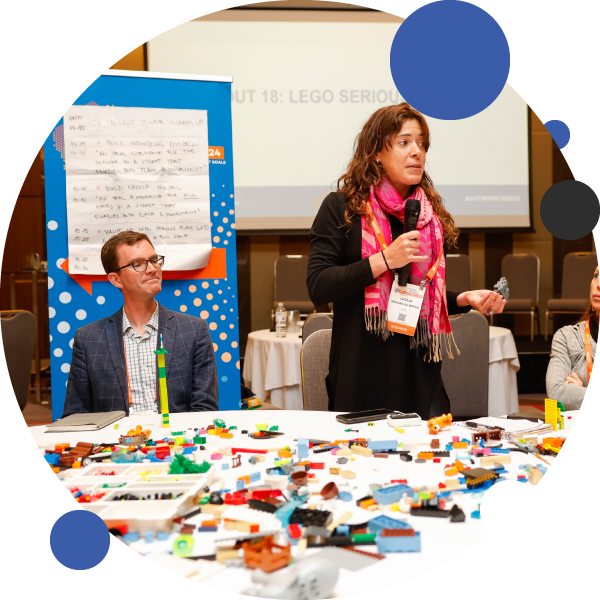
In addition to traditional paper presentations, ATRF 2026 features interactive workshops (90 minutes in duration) that encourage active participation, critical discussion, and practical skill-building.
Workshops are designed to foster collaboration between researchers, practitioners, policymakers, and industry, with a strong focus on translating research, data, and emerging technologies into real-world transport outcomes.
Day 1 – Tuesday, November 24
Beyond the Black Box: Building Transparent Transport Models with Open-Source Software
Get hands-on with AequilibraE, an open-source Python platform for transport modelling. Participants will work through practical examples using open data and explore network building, path finding, traffic assignment and route-choice modelling in transparent and reproducible workflows.
Led by Pedro Camargo — Outer Loop Consulting.
Room Location: B11.B2.104
Reducing Trauma and Improving Safety on Rural and Regional Roads: Sustainable Road Sealing Innovation towards Net Zero
Explore how recycled materials, advanced modelling and sustainable pavement technologies can contribute to safer and more resilient rural and regional roads. The session will combine research insights with polling, case studies and collaborative problem-solving around road safety, pavement performance and sustainability.
Led by A/Prof. Sanjay Nimbalkar and Dr Tanmoy Das — University of Technology Sydney.
Room Location: B11.B2.102
Connecting Models, Methods and Meaning in Transport Research
How can qualitative and quantitative approaches be brought together to produce more useful transport research? Through facilitated exercises and discussion, participants will explore mixed-methods thinking and identify opportunities to strengthen their own research through methodological collaboration and triangulation.
Led by A/Prof Jennifer Kent — The University of Sydney.
Room Location: B11.B3.104
Introduction to Behavioural Insights: Designing Better Transport Policies and Services
Explore how behavioural science can help bridge the gap between how transport behaviour is modelled and how people actually make decisions. Using Australian case studies, live demonstrations and the EAST framework, participants will learn practical ways to design and test more effective transport policies and interventions.
Led by Alex Iljin — The Behavioural Insights Team, on behalf of the ATRF Behavioural Insights Group.
Room Location: B11.B3.103
Visit the Railway Operations Centre (ROC)
Sydney Trains is the operator of rail services across the metropolitan Sydney area, bounded by Berowra, Emu Plains, Macarthur and Waterfall. It also operates the Rail Operations Centre (ROC).
Conference attendees can register for a guided visit to the Rail Operations Centre (ROC), the Sydney Trains 24/7 control facility that manages Sydney’s suburban rail network. Places are limited.
Hosted by 
Visit the Transport Management Centre (TMC)
The TMC is the operational heart of the New South Wales transport network, bringing together technology, expertise, and real-time information to manage traffic and transport across the state.
Conference attendees can register for a guided visit to the Transport Management Centre (TMC) and experience a behind the scenes look at how Transport for NSW keeps the state moving every day. Places are limited.
Hosted by
Visit the Central Station transformation and Clock Tower experience
This walking tour offers a rare opportunity to experience both the historic and contemporary layers of Australia’s busiest transport hub. Discover the stories behind Central Station’s transformation, and visit the historic Clock Tower, a Sydney landmark that has kept the city running on time since 1921.
Attendees can register for an exclusive guided tour of Central Station, recently recognised with the 2025 NSW Architecture Award for Heritage and Sustainable Architecture. Places are limited.
Hosted by
Day 2 – Wednesday, November 25
Looking to a More Sustainable Future: Utopia or a Real Possibility?
Move beyond sustainability as a slogan and grapple with the real trade-offs involved in transforming transport systems. Participants will work through an interactive “carbon-and-constraints” challenge, balancing emissions reduction with equity, resilience, affordability and other practical considerations.
Led by Dr Andrea Pellegrini and Prof John Rose — ITLS.
Room Location: B11.B2.104
From Participatory Mapping to Real-World Planning – How to Enrich Spatial Information with Unheard Contexts
Discover how participatory mapping and Public Participatory GIS (PPGIS) can bring lived experience and traditionally unheard perspectives into transport planning. Participants will complete a live mapping exercise, explore the resulting data and discuss how these approaches can support more inclusive planning.
Led by Jussi Sjögren — Tampere University.
Room Location: B11.B3.104
Uncovering Secrets of Successful Cross-Sector Collaborations
Successful transport initiatives increasingly require researchers, government, industry and communities to work across organisational boundaries. This interactive workshop uses practical frameworks, case studies and group discussion to explore how cross-sector collaborations can be established, managed and sustained.
Led by Dr Sandra Mandic — AGILE Research Ltd.
Room Location: B11.B1.101
Between the Alert and the Action: Human Trust in AI Transport Safety
Experience firsthand how transparency influences trust in AI-assisted transport safety systems through a live fatigue-monitoring simulation. Participants will compare different AI alerts, examine their own decision-making and co-design principles for more effective human–AI collaboration in safety-critical settings.
Led by Damien Colabattista and Nicholas Duck — Opposite.
Room Location: B11.B3.103
High-speed rail (HSR)
This workshop will explore how accessibility changes may influence travel behaviour, residential and employment location, population distribution, regional development and wider urban outcomes.
Led by Prof. Liton Kamruzzaman – Monash University.
Room Location: B11.B2.101
Visit the Railway Operations Centre (ROC)
Sydney Trains is the operator of rail services across the metropolitan Sydney area, bounded by Berowra, Emu Plains, Macarthur and Waterfall. It also operates the Rail Operations Centre (ROC).
Conference attendees can register for a guided visit to the Rail Operations Centre (ROC), the Sydney Trains 24/7 control facility that manages Sydney’s suburban rail network. Places are limited.
Hosted by
Visit the Transport Management Centre (TMC)
The TMC is the operational heart of the New South Wales transport network, bringing together technology, expertise, and real-time information to manage traffic and transport across the state.
Conference attendees can register for a guided visit to the Transport Management Centre (TMC) and experience a behind the scenes look at how Transport for NSW keeps the state moving every day. Places are limited.
Hosted by
Visit the Central Station transformation and Clock Tower experience
This walking tour offers a rare opportunity to experience both the historic and contemporary layers of Australia’s busiest transport hub. Discover the stories behind Central Station’s transformation, and visit the historic Clock Tower, a Sydney landmark that has kept the city running on time since 1921.
Attendees can register for an exclusive guided tour of Central Station, recently recognised with the 2025 NSW Architecture Award for Heritage and Sustainable Architecture. Places are limited.
Hosted by